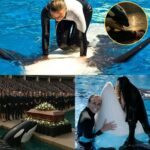
The story began with what was meant to be an ordinary family visit to the aquarium. Jessica, a mother who wanted to give her daughter a magical day surrounded by the wonders of the ocean, could not have imagined that within hours her world would change forever. The aquarium was known for its orca show, one of the main attractions that drew tourists from around the world. The huge tank, filled with artificial waves and carefully designed lights, was meant to showcase the intelligence and power of these incredible marine mammals. For many years, the show was praised as both educational and entertaining, but critics had long warned about the dangers of keeping orcas in captivity. Sadly, those warnings became reality when the orca suddenly turned violent.
During what seemed like a normal performance, the orca charged unexpectedly toward the platform. In a split second, Jessica’s daughter, who had been standing too close, was attacked. The crowd gasped in horror, and the trainers rushed to intervene, but the damage had already been done. News outlets quickly spread the story, and within hours social media was flooded with outrage. Some blamed the aquarium for negligence, others accused the entertainment industry of ignoring scientific research about orca stress in captivity, and still others criticized the audience culture that normalized such shows. The event was not only tragic for Jessica and her family but also became a symbol of the long-standing debate about animal rights, marine conservation, and human responsibility.

The criticism came relentlessly. Activists staged protests outside the aquarium, demanding its immediate closure. Experts appeared on television explaining how orcas are highly intelligent, social animals that suffer when confined to small tanks. Former trainers came forward with testimonies about the warning signs of stress that management allegedly ignored. Within a matter of weeks, the aquarium could no longer withstand the pressure. Attendance dropped sharply, sponsors withdrew funding, and eventually the owners announced that the facility would close its doors permanently. For many people, this seemed like a victory for animal welfare, but it also raised new and complicated questions.
When the aquarium shut down, thousands of marine animals were left in uncertainty. Sea lions, dolphins, turtles, sharks, and countless fish species had been housed there. While the closure was celebrated as justice for the orca, the practical reality was grim. Many creatures that had spent their entire lives in captivity were suddenly without a home. Rescues and sanctuaries around the world were contacted, but resources were limited. Some animals could be transported to marine reserves, yet others were too fragile to survive relocation. The very decision that was supposed to protect animal rights now left many sea creatures defenseless. Families who once enjoyed the aquarium were now confronted with the unintended consequences of shutting down such a massive facility without a comprehensive rescue plan.
More Read